A Deep Dive into IFS, DID, Multiplicity, Pluralism + Lived Experience – With Dr. Jamie Marich and Dr. Dick Schwartz on Therapy Chat Podcast
By Laura Reagan, LCSW-C
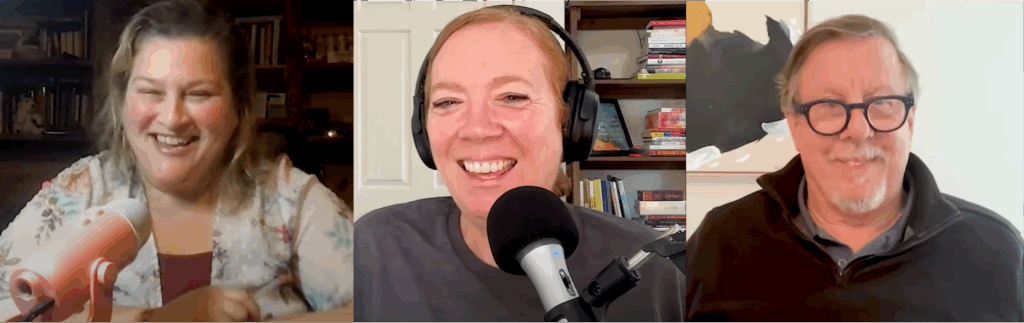
You can watch the full interview on YouTube here.
If you’ve ever felt like different “parts” of you are at odds, or if you’re curious about how dissociation impacts your inner world, you’re not alone. Whether you’re a trauma therapist, a therapist who doesn’t specialize in trauma, or not a mental health professional at all, so many people are searching for ways to understand their inner worlds. Read along for key takeaways and my thoughts from this interview for Therapy Chat Podcast.
Social Media’s Role: Helpful or Hurtful?
There’s a ton of content on social media, especially TikTok, YouTube and Instagram, about dissociative identities, parts work and Internal Family Systems (IFS) therapy. This has led many people to question who/what to believe about pluralism and multiplicity, dissociation and mental health.
Complex Post-Traumatic Stress Disorder (CPTSD), Dissociative Identity Disorder (DID) and Other Specified Dissociative Disorder (OSDD) – formerly known as Dissociative Disorder Not Otherwise Specified (DDNOS) – are mental health diagnoses which have gained name recognition among people in the general public, as a result of increasing exposure to the terms and their symptoms via social media and internet posts. We discussed in this interview that to some people a formal diagnosis is very helpful, while others are not concerned about diagnosis. One thing is for sure: it’s difficult to find the right help when you don’t have an accurate diagnosis.
One of the beautiful things that has been happening on social media is that many content creators with lived experience with dissociative identities have been sharing about their own stories, and what it feels like to live in their systems, for the benefit of others. This has had some positive effects, in terms of reducing stigma and helping others learn about these diagnoses.
Many people believe they may have been misdiagnosed with other mental health diagnoses while actually meeting criteria for CPTSD, DID or OSDD – a common issue since so few therapists and psychiatrists have training in complex PTSD (also known as CPTSD) and dissociation.
Folks are finding resonance with the accounts shared on social media by those with lived experience, and subsequently seeking out accurate diagnoses from trauma specialists. This has led to some controversy in the academic/research world, as some researchers and academics have questioned the lived experiences of those identifying as plural systems, and/or those who identify as having dissociative identities. This controversy was partly responsible for the idea to do this interview, and we touch on that issue in the episode.
Two Trauma Experts Share Their Views on DID and Parts
Dr. Jamie Marich, who has been diagnosed with OSDD, is a trauma therapist and EMDRIA approved EMDR trainer. She founded The Institute for Creative Mindfulness and has authored several books. Jamie has been a staunch advocate for those folks in the lived experience movement, and has highlighted some of the feedback she has received from folks who felt that IFS does not address their experiences.
Jamie approached Dr. Dick Schwartz, who created the IFS model and has also authored many books. These two great minds discussed their perspectives on parts, ultimately leading to the conversation that took place in this interview, which I was honored to facilitate, as a therapist specializing in developmental trauma and dissociation.
In this special episode of Therapy Chat (found here), Dr. Jamie Marich and Dr. Dick Schwartz explored their perspectives on parts, self, dissociation, and dissociative identities, aiming to clarify common misconceptions and offer a compassionate view of our internal landscapes.
This conversation could have been explosive, but these wise colleagues kept the dialogue respectful and noted many points of alignment in their perspectives. Read on for a fascinating discussion that will be thought provoking for anyone who is interested in understanding parts work, dissociation, and dissociative disorders.
Key Takeaways from Our Conversation on IFS, Dissociation and Dissociative Disorders:
- The Mind is Naturally Multiple: Dr. Dick Schwartz emphasizes that having “parts” (what others might call alters or sub-personalities) is the natural state of the mind. These parts are inherently valuable and only take on damaging roles due to trauma and attachment injuries. The goal of IFS is to help them revert to their natural, valuable states.
- De-pathologizing Dissociation: Like myself, both Dr. Jamie Marich and Dr. Dick Schwartz are committed to changing the narrative around dissociation and dissociative disorders. Jamie, as a person with dissociative identities, advocates for de-pathologizing the experience of parts, challenging the traditional academic view that often labels dissociation as an aberration.
- Self with a Capital S: Dick Schwartz describes “Self” as an undamaged, innate core within everyone, characterized by qualities like curiosity, calm, and confidence (the “Eight C’s”). This Self knows how to help parts heal and lead the system. Jamie connects this concept to yogic philosophy, viewing it as a “higher self” or spiritual construct.
- Beyond Diagnosis: The conversation highlights the limitations and potential harm of strict diagnostic labels. While diagnoses can offer validation, the speakers agree that many mental health practitioners do not believe dissociation is real, making it difficult for individuals to receive accurate diagnoses. Like myself, both prefer to view internal experiences on a spectrum rather than a binary “you are” or “you are not.”
- Harmonization, Not Assimilation: When discussing “integration,” Dick clarifies that in IFS, it means the “harmonization” of parts—where they connect, communicate, and get along, rather than disappearing or “melting down into an alloy” as some academic models might suggest. Jamie echoes this, preferring terms like “collaboration” and “cooperation” to describe the goal of working with a plural system.
Read the full transcript of the podcast interview below.
Therapy Chat Episode 458 Full Podcast Transcript
Laura Reagan, LCSW-C She/her
Hi, welcome back to Therapy Chat. I’m your host, Laura Reagan, and today I’m so excited to have a really different and special Therapy Chat experience to share with you. I’m here with Dr. Jamie Marich and Dr. Dick Schwartz, and we are going to talk about their perspectives on parts and self and dissociation and dissociative identities and much more. So I’m gonna ask each of them to start by giving a little introduction to who they are and what they do. Jamie, would you like to go first?
Jamie+ (she/they)
Yeah, I don’t mind at all. So we’re Dr. Jamie Marich, that’s our professional moniker, but please just call us and our team that’s on board with us, Jamie. So we are somebody who doesn’t represent any one particular modality. We are a trainer, an EMDRIA approved trainer in EMDR therapy, but we’re also an expressive arts therapist and we’re somebody who considers ourselves a student of many different modalities combined for this greater mission, which is helping people to heal and transform trauma. Our clinical specialties would be in spiritual abuse, religious trauma, addiction, dissociation. And in 2018, we came out very publicly as somebody ourselves who’s a dissociative system, having been previously diagnosed with OSDD. So we identify as a person with dissociative identities and a big part of our mission in these last few years of our career has really been to change the tone and tenor around the way dissociation and dissociative disorders are talked about. And I think something I certainly share in common with Dick is this commitment to de-pathologizing the experience of parts or whatever we’re calling them.
Laura Reagan, LCSW-C She/her
Yeah, so thank you so much for being here.
Jamie+ (she/they)
Thank you for having us.
Richard Schwartz
Yeah, so good to be with you again, Laura. And I’m Dick Schwartz. I developed something called the Internal Family Systems (IFS) model over the last, I think it’s 41 years now. And it’s been quite a journey to try and help the psychotherapy profession become more aware of the existence of parts and their not being bad, they’re all good. And also to bring awareness of what I call the self with a capital S. And I’ve had some very interesting conversations with Jamie already and look forward to today.
Laura Reagan, LCSW-C She/her
Yeah, I will say I was in Oxford in 2023 at the Master Series and was there taking some pictures for Jamie as you were both on a panel together. And then when it was over and there was the little dance party and you two were dancing together, that was really cool.
Jamie+ (she/they)
That was a lovely conference experience. That’s where I actually met Dick for the first time properly. And it really taught me a valuable lesson because a lot of the concerns and criticisms I had about IFS were around a lot of how other people have taught it, how other people have presented it. And even a very good friend of mine, somebody who’s become a good friend, said, actually talk to Dick himself and see how you feel after that. And so I really value those conversations we had. And like we said, value continuing it here on the podcast.
Laura Reagan, LCSW-C She/her
Yeah, awesome. So let’s start off with how would you, and I’ll let y’all decide who wants to respond first, but how would you say you think about parts?
Jamie+ (she/they)
I’m gonna have Dick go first on that one.
Richard Schwartz
Okay. Yeah, I’m very clear over these 40+ years that parts, what I call parts, other people call alters, but also call sub-personalities and so on, are, it’s the natural state of the mind to have them. The mind is naturally multiple or plural. And that it’d be hard to navigate the world without many different minds helping us and that they’re all, they all have different, often valuable qualities and resources to lend to us, different from each other. And that they’re forced out of their naturally valuable states by trauma and attachment injuries and all the slings and arrows we suffer as kids into roles that can be damaging and they wind up polarized with each other often because of those things. So the diagnoses that people get, for me, are often fairly accurate descriptions of clusters of protective parts, that’s all they are, and that all that can be transformed in some cases quite quickly when the parts feel respected and loved and witnessed about what happened when they took on their roles in the past and retrieved out of where they’ve been stuck in the past and are able to release what we call the burdens they carry from the traumas, which are extreme beliefs and emotions that came into the person’s system and attached to these parts and then drive them like a virus. So this, IFS, is a model of transformation in that sense. It’s not just getting to know the parts and accepting the way they are. It’s really helping them revert back to who they were designed to be.
Laura Reagan, LCSW-C She/her
Hmm
Jamie+ (she/they)
So I would say Parts, kind of just continuing that flow, exist to either protect the self or the system or to get a need met. And this is an issue of debate in the dissociative disorders community, because some of us, myself included, really like the language of parts. I use parts in talking about my own system because I do feel it’s the least pathologizing terminology that’s out there. I cringe when I hear alter personally, yet a lot of people in our larger community still like to use the word alter because for them it helps distinguish that that aspect – alter part of ourselves just feels a little more real, a little more solid than some of the way parts get talked about like in IFS or in other models, like the ‘we all have parts’ idea. Because yeah, I’m so glad that’s out there that that parts are a normal part of this mosaic mind to quote the title of one of your books. And that’s a metaphor that I really like. But a thing I’ve really emphasized in my work is that depending on the system, sometimes depending on their clinical diagnosis, which I’m not necessarily too attached to, there may be language that they prefer instead of parts. Yet, I think we’re all getting at the same idea here, which is that the mind is not a monolith. It’s not a unitary construct, not for any of us. Yet, for those of us who’ve been traumatized, that can take on a bit more dimension.
Richard Schwartz
Yeah, for me, the problem with the DID world is the pathologizing of the parts or alters that, as far as I know, that world sees the mind as unitary, the healthy mind as unitary, and trauma creates these parts, creates these alters.
Jamie+ (she/they)
If I can just ask, how are you defining the DID world? Are we talking about the more academic establishment or plural? Yeah. Because I would say even who I generally call the plural community now, we reject that idea too. yeah. Yeah.
Richard Schwartz
Yeah, they have to go to the establishment, yeah. I’m glad to hear that, but the point I’m making is I’ve been fighting against that conception of parts my whole career. That these are shards of the broken vase and the goal then becomes to help them disappear and put Humpty Dumptyback together again. And that frame mainly came from the academic DID world. And…
Jamie+ (she/they)
Agreed.
Richard Schwartz
It does a big, big disservice to who they are.
Jamie+ (she/they)
And I believe this is a big point of commonality between us because so many of us who actually have been diagnosed or who relate to the diagnosis are also challenging that narrative. Like earlier this year, somebody from our community had a t-shirt made saying ‘we are not puzzles to be solved,’ because in one of the very established academic papers, that was a metaphor that was put out there by two very well respected folks in the more…
Richard Schwartz
Nice.
Jamie+ (she/they)
…academic establishment. I just wanted to say that for the plural community who are now being more emboldened to speak up, I really think we’re on the same page there.
Laura Reagan, LCSW-C She/her
Can I say, I would like to, for listeners who are unaware of this, I would like to sort of give a little background that there has been kind of a controversy within, I guess, the trauma and dissociation field where there are some people who are academics who are very influential people who are seemingly concerned about those with lived experience of dissociation and dissociative identities claiming to have DID or be part of multiple systems or depending, however they define it, that if you don’t have a diagnosis that that means that you are basically malingering or you are just pretending or performing something for attention and that is one of the things that has created a big amount of friction. And one of the things that Jamie, you’ve been speaking out about because of your own lived experience and also the things that people in your community are telling you they’re very upset about.
Jamie+ (she/they)
Mm-hmm. Right. Well, I think you’ve summarized it pretty well, and this criticism has existed before social media. I think now because there are so many DID, OSDD creators on social media and even a lot of social media content is out there normalizing the idea of trauma in parts. So it’s not just a DID issue as far as I’m concerned. But I think there’s long been this idea in the establishment that if you’re quote unquote self diagnosing that it’s not valid. If you’re getting information about your diagnosis, it’s not valid. I think the bigger concern though, because that is one debate, is that for those of us who are now saying, we’re a system, we’re proud of it. It’s nothing that we’re trying to hide. We’re not this vase that needs to be fixed to use the metaphor.
That’s what’s causing a lot of the friction. That’s what is causing some of the talk about, they have to be malingering or they are just “Borderline,” if this is something that they can possibly be proud of or even want to put out there. Last year, there was a movement where we really started talking about ‘shame is not a diagnostic criteria,’ here because a lot of the academic establishment perception has been that people with DID naturally have to have a lot of shame and don’t want to talk about this publicly. And I think if anything, we’re just trying to change that narrative. And I want to hear Dick’s thought on this because he’s been around longer than I have in these academic circles saying these things.
Richard Schwartz
Yeah, I mean, back in the day when I was talking about this, were lots of psychiatrists saying people who talked about having alters were malingerers. ‘They were making it up,’ you know, ‘they were just trying to get attention’. So I don’t hear much of that anymore. But, you know, for me, it’s all a spectrum of what we all are. So depending on how much trauma you’ve suffered a lot of the time. So. People with the DID diagnosis are no different from the rest of us except that their systems got blown apart more. And so there are more amnesic barriers among or between them and there isn’t as much trust in what I call Self, because they couldn’t protect them. They don’t often know about Self. But aside from that, there’s no difference really. And there are people closer to one end of the spectrum than another, but we’re all, like I keep saying, we’re all multiple personalities.
Laura Reagan, LCSW-C She/her
Well, I just, need to… I feel like screaming this. There’s a major problem with saying that, you know, if people aren’t diagnosed, then they aren’t, don’t truly have one of these, that they don’t have the experience that they say and believe that they have. I mean, other than the fact that people know themselves better than, you know, a healthcare provider does. Also, let’s look at the field of mental health, it’s not easy for people to be diagnosed with these labels because there are so many mental health practitioners who do not believe that dissociation is real, they don’t believe that DID is real, that’s what they learned in school and they still think that. So it’s not simple or easy to get that diagnosis even when you have all the symptoms, you’re more likely to get something like a Borderline Personality diagnosis or Bipolar Disorder or Schizophrenia.
Jamie+ (she/they) (16:30.283)
Right. And I’d be curious for us, because I do want to talk about the Self issue too, but to even look at the relevance of diagnosis in modern times. Because on one hand, I mean, how I summarize it is, I have a love hate relationship with this idea of diagnosis. It’s mostly hate, because I think sometimes we can get too attached to our labels and we can define ourselves negatively by our labels. Yet I also know that in 2004, when I received the diagnosis that I did, it was very validating that my life, my world, my brain suddenly made sense. That being said, yes, on average, it takes a person with DID seven to eight years to get properly diagnosed. And a lot of why that is, is we’re still dealing with this legacy. It’s getting better, but it’s still bad in certain quarters of people saying that dissociation isn’t real, let alone…dissociative disorders or that people are making it up. It’s too fantastical to be true, et cetera. So that’s just my thought on the whole diagnosis thing.
Richard Schwartz
Yeah, but that whole belief comes from the belief that the normal mind is unitary, mono-mind belief. So if you believe that, then people with DID have to be some kind of aberration. And they’re probably just making it up. But if you believe that everybody’s got these parts, then it makes sense that it’s just a continuum and are.
Laura Reagan, LCSW-C She/her
Mm-hmm.
Richard Schwartz
Yeah, I’m not wild about diagnoses in general. I don’t like, we don’t diagnose people. And there’s also that kind of binary aspect to it. You’re either DID or you’re not DID. For me, like I said, it’s a spectrum, it’s a continuum.
Laura Reagan, LCSW-C She/her
Mm-hmm. Right.I agree. mean, I feel that it’s a spectrum too. And I feel that. But I am curious about something. You said that depending on how much, Dick, you said that depending on how much trauma people have and the amnesiac barriers may be more entrenched. That might not be the word you used, but in my experience, it seems like. And I think this is a conception in the popular culture and I’m curious what Jamie and Dick, you both think about what I’m gonna say that, well, first of all, in my experience working with trauma survivors for 22 years and clinically for…14 years. It’s not necessarily… everyone who has trauma thinks that what they went through wasn’t as bad as what other people have gone through. That is just an example of how dissociation prevents us from feeling truly how deeply impacted we were. I’ve experienced that myself quite a bit, where many things where I’m like, well, I don’t think it was traumatic because it doesn’t feel like anything when I think about it. And then, you know, finally doing layers and layers and layers of work, it is super traumatic. It’s just really buried in there and a lot of it’s nonverbal or preverbal.
So it feels like to me what I’ve experienced with clients is that it’s more likely for people to develop the levels of dissociation that would normally be connected with a DID diagnosis or dissociative disorder diagnosis when they’ve had early pre-verbal trauma or attachment, you know, severe attachment wounding, versus like what people would think when we say how severe someone’s trauma is, people think they were severely abused, they were ritualistically abused, and that may be its own thing that may create a different experience too. So I’m just really curious about y’all’s thoughts.
Jamie+ (she/they)
Well, it’s a conversation that we’re even having in the plural community right now, because there has been a lot of gatekeeping around what trauma is quote unquote bad enough trauma to qualify for a certain diagnosis or to have a certain level of dissociation or separation be acceptable, so to speak. I don’t know. I mean, when I was in graduate school, I was taught a lot of horrible things at the very Catholic graduate school I went to.
But one of them, and this was a myth that I still hear being taught in some graduate programs, which is to develop clinically significant DID, you had to have experienced something like ritual abuse. And when I got formally diagnosed and realized, no, all kinds of trauma can qualify you for it. And I think it just goes to this idea that trauma and our experience of it is subjective. And I’ve gotten very concerned even in our community about judging people for the level of trauma that they’ve had and their responses. I guess that’s all I have to say about it, at least at this point, is I don’t think it’s a contest. Yes, I do tend to think the earlier trauma happens in the developmental process, the likelihood of these things we’re talking about to have maybe more clinically significant impact, but I always meet exceptions to the rules.
Richard Schwartz
Yeah, so I worked with DID clients for 20 years or so. It was back in the day when I was really trying to, like The Mosaic Mind was written about one of them, but I was really trying to understand systems, inter-systems. And in asking parts where they were stuck in the past, yeah, we got some pre-verbal stuff, but we got stuff from all ages and…
So for me, trauma in general creates a level of dissociation. So, you know, I have this map of the territory and there are parts that we call exiles and they’re dissociated. They’re locked away inside because of the way they’ve been hurt. then these other parts are forced to become these protectors that are trying to run the person’s life.
And so most every trauma survivor has that map and how much they shift in terms of becoming DID diagnosable or Borderline diagnosable or addiction diagnosable, depends on a lot of factors, including, I think, probably genetic factors in terms of what’s available to the parts to protect the system. So yeah, it isn’t certain kind of traumas produce certain kinds of diagnoses for me. And it’s better to just come to a client with a very open mind about it and have them teach you about their system.
Jamie+ (she/they)
Yes.
Laura Reagan, LCSW-C She/her
I couldn’t agree more on that aspect. That’s exactly what I do. Yeah.
Jamie+ (she/they)
It’s how we feel.
Jamie+ (she/they)
So I think that being said, I’m not the interviewer, but I think, yeah, an important part of this conversation though is to talk about how “Self” is defined. Because, you know, a lot of times, especially when I hear Dick talk, like I like what he says and I’m largely in agreement with what he says, yet I know where a lot of people who are,
Laura Reagan, LCSW-C She/her
We’re just talking!
Jamie+ (she/they)
kind of in this group that I represent, the plural community, not the DID world that’s academic. I ran from that literally. But where we can get some hesitancy around IFS, and that’s what I wanted to talk about, is first of all, this idea of capital S self. Because self, like parts, can mean different things to the variety of us in this world. So I think that was the biggest question I had for you on behalf of my community, which is how are you – because I like – I love how you map and all that. How are you defining Self, the capital S Self?
Richard Schwartz
Okay, so what I’m calling Self, I stumbled into as I was exploring these inner worlds and found that if I could get parts to separate enough from whoever was left, this other person would emerge with all these great C-word qualities like curiosity and calm and confidence. We have what we call the eight C’s of Self. And that that person turns out now, I can say with a lot of…
a lot of confidence after 40 years of this and thousands of people. That person isn’t everybody and can’t be damaged and is just beneath the surface of these parts. So that when they open space, it pops out and has many wonderful leadership qualities and knows how to help the parts heal, but also how to lead the system in the inner world and the outer world. And help the parts trust that they can become more advisors or help in lot of very helpful ways, but they don’t have to run the whole system in the way they thought they did. And that the way they had been doing for years because they didn’t know about Self and they didn’t know about Self for really good reasons. And also a lot of these parts don’t trust Self because Self didn’t protect when they were younger and also Self locked away a bunch of – well, Self didn’t do it – but Self allowed a lot of parts to be locked up, the exiles. So there’s a lot of distrust in Self leadership initially. And there are many times, like many of the DID clients I was working with back in the day, they would say, ‘there’s nobody like that inside of me.’ The part I was talking to would say, I’m her.
‘There’s nobody else like that. I don’t know who you’re talking about.’ And they would maintain that position until I finally convinced this one to open a little space in there. And the same self would pop out that popped out in everybody. And then there was a shit storm because they’d been, they’d gotten attached to me because I was the one who was talking to them. You know, I was doing what we call ‘direct access’ and I was forming these very close relationships with each of the parts and they didn’t know this Self. So they thought I was abandoning them for the Self. And so we had to work through that. But the point being that it was the same Self that I found in non-DID people, people who hadn’t had so much trauma. And it wasn’t until I found that in those kinds of clients that I could start to conclude that this is in everybody. So anyway, that’s where I am with it.
Laura Reagan, LCSW-C She/her
I have a question, but I don’t know if Jamie, you have something you want to say.
Jamie+ (she/they)
Yeah, go ahead. No, I want you to mediate this. We have thoughts, obviously.
Laura Reagan, LCSW-C She/her
My thought, my question is, Dick, if you would equate Self, if we took away the idea of trauma and therapy, if you would equate Self to something else that people would recognize like spirit, soul, inner wisdom, highest, yeah.
Jamie+ (she/they)
God.
Richard Schwartz
Yeah, because after I was encountering it in people, see, I learned attachment theory in graduate school like you guys. And attachment theory says to have any of those qualities, you had to have had a certain kind of parenting at a critical point in your childhood. And if you didn’t get that, you’re out of luck until you get it from a therapist or some other relationship.
And I was finding it in people who not only hadn’t had good enough parenting, but had been tortured on a daily basis. So at some point I had to throw out attachment theory. I had students who would say, well, maybe it’s like Buddha nature, or maybe it’s like Christ consciousness, or maybe it’s like Atman. And I would look into that and, my God, all these spiritual traditions have a word for it. And almost no other psychotherapy knows anything about it. So for me, that is what it is. The difference being in most of those spiritual traditions, it isn’t a leader. It’s more of a witness state or a state to try and achieve rather than active. What?
Laura Reagan, LCSW-C She/her
Like enlightenment or something.
Richard Schwartz
Yeah, you achieve enlightenment, it’s the place in mindfulness from which you witness your parts. You don’t interact with them. And for me, Self was, as soon as I would access it, it would go into action and become an internal good attachment figure or a good parent inside or a good leader. And so that’s the main difference.
Jamie+ (she/they)
Yeah. So a couple responses I have to that. Dick, I think another point of commonality with us is kind of throwing traditional attachment theory out because it’s never comported with me and my understanding, even as somebody with a lot of attachment trauma. The way you describe Self every time I’ve heard you speak or heard your audio book or hear you talk about it now, it is very connected to me with yogic philosophy and this notion of the higher self, our Prakriti and Purusha, which are these parts or aspects that we show up as in the world. And yeah, trust me, there’s a big part of me that’s really flowing and connecting with what you’re saying, especially as a spiritual person, especially as a yogic practitioner. But I think, again, where part of my edge is where I’ve heard some IFS practitioners out there, I think, kind of elevate Self to maybe they’re doing it wrong, or in your view, but elevate Self to this place of like, you know, that is the unbroken vase. And the goal of therapy is to get you, you know, in your highest Self, as opposed to accessing Self, because like, that’s an idea I can get behind is accessing Self versus feeling like I have to constantly show up as this Capital S Self in every situation. And yeah, and as…
Richard Schwartz
Not a bit.
Jamie+ (she/they)
And as you were talking about the eight C’s, I think one of my parts, the most smart ass part, naturally had a question. Are you saying that the parts can’t have those qualities? Let’s hear more about that.
Richard Schwartz
Not a bit. in fact, okay. So again, going back to my DID days, I would spend, you know, maybe 10 sessions working with one part, one alter. And as I did that, it would start talking about its parts. And I could get it to work with its parts with itself. And so, and then I…
Jamie+ (she/they)
Mm-hmm.
Richard Schwartz
I actually went one layer lower and worked with the sub parts of the part. And, you know, for me, it’s all fractals. All, you know, it’s, it’s all turtles all the way down. It’s the same form, isomorphs at all levels. And so parts are little people who have Self and parts. And we are people who have
Self and parts and the goal is to have them all be more connected and but not disappear by any means because they’re all valuable.
Jamie+ (she/they)
Again, another point of connection that I think the goal is to have them all be, I love that word, connected. I just think like in our community, there’s been a little hesitancy around the hierarchy perhaps of Self as being where it’s all at and maybe a dismissal of the wisdom of the parts.
Richard Schwartz
Yeah, that’s a mistake or that’s bad IFS. No, it’s not the case at all. You know, there’s a hierarchy to the degree to which the Self becomes a kind of leader. But there are situations where I want my parts to take over and invite them to, or there are many times when I get into conflict with my wife, for example, and my protectors are there.
Jamie+ (she/they)
Okay. Mm-hmm.
Richard Schwartz
I talk to them about separating a little bit or letting me have a little bit of Self too. And they trust me now enough to do that. But, you know, I’m kind of glad they’re there taking care of my exile. Yeah, the idea, I for me, I’ve been a big critic of spiritual bypassing practices where the goal is to be in that state all the time and where you…you have a lot of antipathy for the material world. And in doing that, and there are lots of spiritual practices that advocate that, you’re really abandoning your parts that way. And IFS is really the opposite of that.
Laura Reagan, LCSW-C She/her
So glad you mentioned spiritual bypass. I always want somebody to talk about spiritual bypass. And it’s so prevalent now, because one of the things I was curious about and one of the ways that I think a lot of people are trying to take the fast track right now is through using psychedelics in ways that are just to seek this ascendancy or whatever and not using it in a way that where they integrate it back into their life, not because they want that, but they just – that’s sort of the way that they’re hearing about it and they’re following that. So I was wondering if those experiences that people have during psychedelics where, you know, it’s like that unity consciousness, if that is related to the same or different from what you see Self as being.
Richard Schwartz
Yeah, so where I came down, this is probably 20 some years ago, is the idea that what I’m calling Self is a drop of that big ocean. Or I love the metaphor of quantum physics where photons are both a particle and a wave. And so there’s a wave state of Self that you enter when you meditate enough or you do psychedelics and you do feel that you’re in consciousness and you feel the lack of separation, it’s blissful often. And then you start to particle-ize as you come back into your body and you realize, now I’m not connected and there’s some grief coming back actually. And it’s important to come back because when you come back, you can actually start to remember that state but not have to be in it, and know that that’s some of who you are, and then use that memory as a way to access more Self, and then from Self begin to heal your parts more and more. And that becomes a virtuous cycle because the more you can unburden, the more access you have to that higher level, and the more you can unburden, the more you can heal both relationally in the outside world and internally.
Jamie (she/they)
And a lot of the states that are being discussed here can also be accessed through certain kinds of meditation, especially if you have the discipline to stick with it. I’m not opposed to the psychedelic movement – have a lot of concerns about it not being, just choosing our words carefully here, well-navigated. I think, Laura, you said it very well. But certain meditative states definitely get you there. They get me there.
I also echo the metaphor of the wave in the ocean. That’s a pretty common metaphor in yogic tradition, at least as it’s been handed down to students in the West, this idea that a wave can never not be the ocean, that the ocean is the ocean and the waves are these unique expressions. And in that metaphor, especially as it’s used to present in yoga, this idea of the higher self versus like the flesh bound self,
For me, it’s all one, it’s all connected. So I naturally get some trepidation when people will try to talk about like, your one conscious self is where it’s all at. Your individual emotions and expressions don’t matter. They do matter because being able to honor those is honoring your divine self as well. For me, there’s no separating them. That’s just always been crystal clear as a meditator.
But I know it can be hard to teach it, can be hard to share it, until you’ve allowed one to have that experience and whatever is going to help you experience that whether it’s a therapeutic modality, whether it’s an assisted psychedelic experience, whether it is meditation, whether it’s prayer in a way that is not spiritual bypassy. I’m glad you brought that up. I’m actually doing a whole article on that in the next Psychotherapy Networker.
I’m a fan of anything that helps people or systems get to the healing that they need using whatever language or terminology that works for them.
Laura Reagan, LCSW-C She/her
Beautiful and I love the answers that you’re both providing. Thank you so much for this. So there’s two more quick questions I want to ask before we wrap up.
Jamie+ (she/they)
Er.
Laura Reagan, LCSW-C She/her
One’s about that idea. I think we got there, but I just want to ensure that we answer the question of do you… what do you, Jamie and you, Dick, think about when people say some people have, there is no Self. Some people say I’m a system and there is no Self here. How do you view that?
Richard Schwartz
to be in..the most well, no, there’s no Self in the way I describe it, or there’s no, just a..?
Laura Reagan, LCSW-C She/her
when people say ‘I’m part of a plural system, but there’s no Self, there is no Self.’ Like when people will say like, ‘there is no host. There is a system, but there is no host and there is no Self here.’ I’ve seen some people say that, but I don’t know if it’s a common thing that is said or not.
Jamie+ (she/they)
‘There’s no host.’
Richard Schwartz
They can have their own beliefs about it. It’s just not been in my experience at all.
Jamie+ (she/they)
Yeah, a lot of people, again, this is not my direct lived experience because we do have an adult self driving the bus, somebody we call a host or a core self. It’s called different things in different systems. I know that a lot of, it’s not even a lot. It’s some folks I know. I talked with one yesterday and I have a very good friend who also qualifies in this, will say that there is no host, that even if there was at one point, they went away, they dissolved. And I know folks like that are some who can have some of the trepidation around IFS, yet I’m gonna go on a limb here, because the way Dick is describing Self as more of a spiritual construct, which is one of the ways that I really like it and receive it, I think you can be a system without a host, in a classic sense, and still tap into this self-energy, I just think it might be worthwhile to call it something else because that word Self can be so weaponized in therapeutic systems.
Richard Schwartz
Yeah. I agree with that and you know, in the Buddhist world, no self is the goal.
Jamie+ (she/they)
Yeah, exactly.
Richard Schwartz
With me as Self, it’s what’s so full and empty with all these parts, open space when the quote unquote ego is separate. It’s the same thing. What they call no self is what I call Self. yeah, but what I was saying earlier about how many of my DID clients, when I would introduce even the idea that there was somebody in there.
Jamie+ (she/they)
And it’s very Bhagavad Gita.
Richard Schwartz
Resisted it. They just really said no, there’s nobody’s just me, these others and there’s nobody anywhere like who you’re talking about and Yeah, when they open, when those parts were willing to take space the same Self popped out. So that’s some of where my position comes from
Jamie+ (she/they)
Yeah. And I might explore this further because I might make a contention here that capital S self as Dick is defining it is different than the idea of a host or a so-called ANP that another model uses. Yeah.
Richard Schwartz
I think it is. I totally think it is. Totally. I think that…
Laura Reagan, LCSW-C She/her
That could have been a misunderstanding on my part even in what I thought.
Jamie+ (she/they)
No, I don’t think it’s a misunderstanding because what you articulated is why a lot of plural folks have struggled with IFS. So I’m glad we kind of got that discussed.
Richard Schwartz
Never
Laura Reagan, LCSW-C She/her
Okay.
Richard Schwartz
Yeah, I think what they call a host is really what we call a Self-like part. It’s a parentified child that a lot of other parts don’t like.
Laura Reagan, LCSW-C She/her
Mm-hmm. I can relate to what you’re saying there in my experience with people as well. And okay, so the last question, because we are running out of time, is your thoughts on, is integration the goal in your way of looking at things?
Jamie+ (she/they)
come back to that is – how are you defining integration?
Richard Schwartz
Yeah, I was going to say it depends on how you define it. So if you’re talking about the way they define it in the academic DID world, the answer is no.
Laura Reagan, LCSW-C She/her
That’s where I’m thinking.
Richard Schwartz
Yeah, but we use the word integration as the harmonization of these parts so that they, you know, where they were polarized, now they can talk to each other and they get along and they feel connected to each other and to the Self and the larger system. So we’re just rounding up all these outliers and we’re bringing them back home. They don’t disappear, but you feel…
You don’t feel them as much or you don’t sense them as much because they’re not in extremis. They’re not standing out as much. But they’re all instead in harmony.
Jamie+ (she/they)
Love that word harmonization. Other terms I’ve used, collaboration, communication, working together. I think we’re on the same page about that. And if we’re using as therapists this term integration, I would encourage therapists listening to this, I would encourage any clients who are listening to this to normalize asking the question, how are you defining integration? Because yes, concurred in a lot of the academic world, integration is melting everything down into an alloy. I know, some lip service I think is given to, yeah, I think in some circles with some scholars, there’s some lip service given to this idea of cooperation, et cetera, but none of that has ever landed with me in a way that feels good. So this idea of harmonizing, I think is beautiful. And when we even as…
Laura Reagan, LCSW-C She/her
like assimilation.
Jamie+ (she/they)
somebody who lived as a professional for many years with this diagnosis but was afraid to talk about it, I think it was operating on this idea that you have to be integrated in this classic sense in order to be well and functional. And that’s just not the case. I mean, a term that is coming into wider use is this phrase functional multiplicity. I don’t really like the word functional because I think that’s a bit ableist, but…
Laura Reagan, LCSW-C She/her
Hmm.
Jamie+ (she/they)
I do like the idea of harmonization, cooperation, communication. And I go to one of my mentors and teachers, Francine Shapiro, the goal, she would say the goal is to help people live a more adaptive life. Think adaptive’s a little cold. I would say the goal is to help people live a more harmonized life, more, borrowing your word, Dick, or to help people just live a more collaborative life with all the things that they are.
Richard Schwartz
Yeah. We didn’t have the big explosive references, yeah.
Laura Reagan, LCSW-C She/her
Do we have time…sorry. Say that again.
Richard Schwartz
No, I say we didn’t have our big clashes that I was prepared for. So, no, we agreed on…
Laura Reagan, LCSW-C She/her
None of the drama, the excitement.
Jamie+ (she/they)
Well, I remember when I first met Dick, you know, I introduced myself and he said, ‘you’re the one who’s been bad talking IFS’. And I kind of laugh, namely, I have my concerns for sure. But I’m really glad I went on my friend’s advice and, Dick, talked to you as opposed to what some others who teach IFS have said, because I think that’s still a problem that I’ve spoken to. But I’ve really enjoyed these conversations, because even though I think there are some differences in terminology and approach. I do agree that we have a lot more in common than not.
Richard Schwartz
Glad to do it. I agree too.
Laura Reagan, LCSW-C She/her
I think that this conversation makes me see that Dick as the developer of IFS and the voice of IFS is more of an ally to the plural community than people may have recognized before. In my opinion, as I don’t identify as being part of the plural community, so I’m not speaking for them, but it looks that way to me as an outsider.
Richard Schwartz
Hope so.
Jamie+ (she/they)
Thank you, Laura, for hosting us. This conversation has meant a lot to my system and I’ll certainly share it proudly with our community.
Richard Schwartz
Yeah, I’ve enjoyed it very much and yeah, I’m happy to keep it going.
Laura Reagan, LCSW-C She/her
So thank you, thank you, Dick and Jamie for spending some time here together. This was really interesting and I think, I hope that therapists and non-therapists who listen to this will really have their minds inspired by thinking about these topics in such a really…
I don’t know what the word is I’m looking for, but in a rich way. So thank you so much for what, harmonically. Thank you so much for being my guest on Therapy Chat today.
Jamie+ (she/they)
in a harmonized way. Harmonized.
Jamie+ (she/they)
Thank you, Laura.
Richard Schwartz
Thanks for having me on. Yeah, thank you.
We’ve got more great content about trauma therapy for you!
Subscribe to Therapy Chat Podcast on YouTube to get each episode as soon as they are published!
Subscribe to Therapy Chat on Apple Podcasts! If you love Therapy Chat, leave a rating and review here!
Sign up for my email list to get news and updates about Therapy Chat and Trauma Therapist Network here.
If you’re a trauma therapist, get discounts on trainings, special offers and learn about the Trauma Therapist Network membership community here.
Find my list of most frequently recommended resources for learning about trauma here.
Looking for holistic, somatically oriented trauma focused therapy in Maryland? My practice is accepting new clients virtually and in person. Visit our website here.